
4 Steps to Take When Your Child’s First Report Card Reveals Gaps in Learning
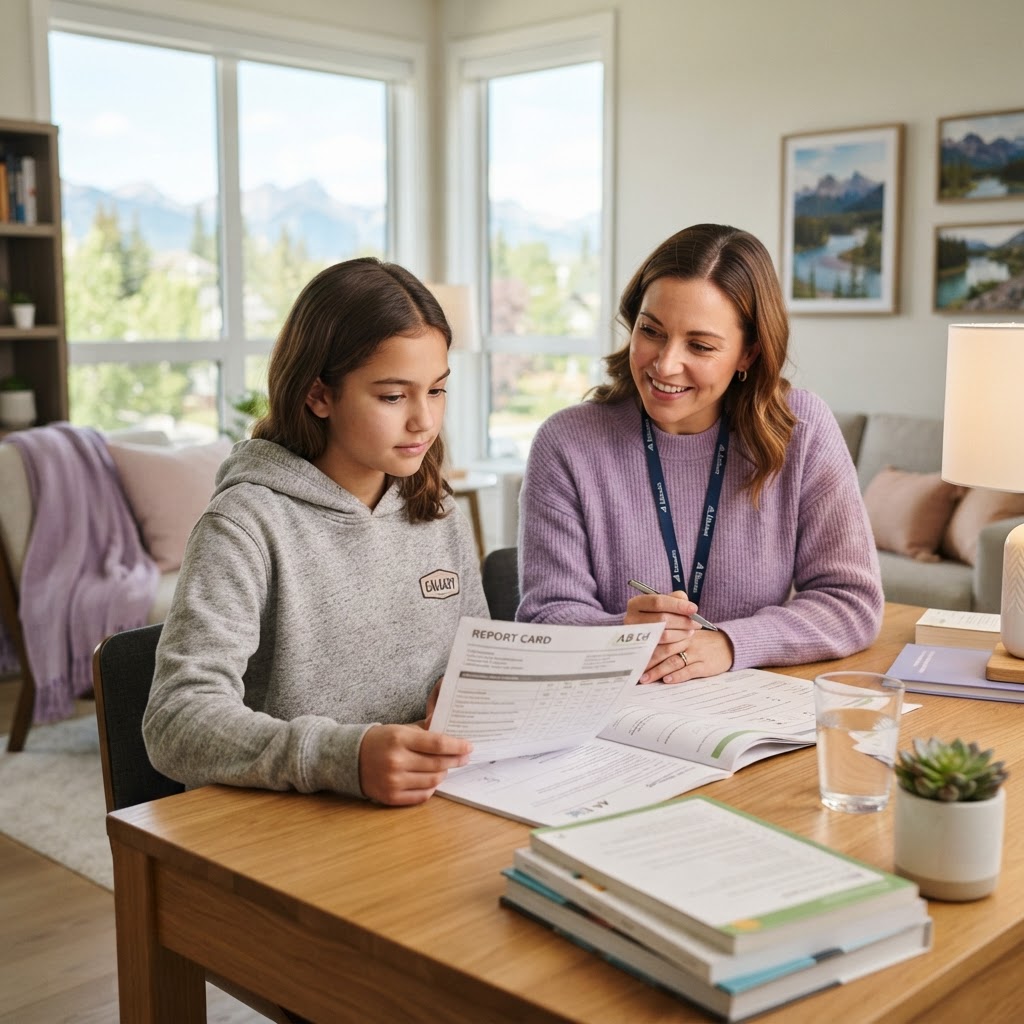
Key Takeaways
- Don't panic over a letter grade: Use the report card as a data point to identify specific missing concepts, not as a final judgment on your child’s intelligence.
- Distinguish between effort and understanding: Determine if the low grade is due to missing assignments or a failure to grasp foundational concepts like algebraic factoring or essay structure.
- Use the right resources: Know when to reach out to a teacher for clarity and when to seek external all subjects support for persistent learning gaps.
- Plan ahead: If your child is in Grade 6, 9, or a high school credit course, align your mid-term goals with the upcoming Alberta Education – Provincial Achievement Tests or Diploma Exam windows.
Translate Teacher Comments into Action Items
Most parents look at the percentage or letter grade first, but the teacher’s written comments often tell you exactly where the breakdown happened. If a comment says, "struggles to organize ideas," that is a specific signal that your child needs help with English / ELA / writing structure rather than just "trying harder."
- Highlight specific verbs: Words like "inconsistent," "needs support with," or "struggles to initiate" indicate a procedural issue. These are habits, not intelligence gaps.
- Check the rubrics: If the report card mentions specific competencies, go to your child’s D2L or Google Classroom page. Match the report card feedback to a specific unit test or assignment you have on hand.
- Schedule a 10-minute chat: If the feedback is vague, send a professional email to the teacher. Ask: "My child is scoring 60% on unit tests; is this a problem with foundation knowledge from September or a specific struggle with current content like Math fractions?"
Categorize the Gap: Is It Content, Habit, or Anxiety?
Before you double down on homework hours, determine what is actually causing the friction. A student who understands Chemistry but forgets to submit lab reports needs a planner, not a tutor. A student who studies for two hours but still fails a Science 9 quiz needs a conceptual bridge.
- The Content Gap: If your student is missing foundational skills—like balancing equations in Science or basic grammar in ELA—no amount of extra home study will fix it without professional intervention.
- The Executive Function Gap: Are assignments coming home unfinished? This often stems from anxiety or a lack of organizational systems. In NE Calgary, we see many high-achieving students hit a wall in Grade 7 or 10 when the workload shifts.
- The Confidence Gap: If your child refuses to open their textbook, they aren't lazy; they are likely protecting their ego from the frustration of being lost.
Align Mid-Term Goals with Alberta Assessment Windows
For the 2026-27 school year, your strategy must account for upcoming provincial benchmarks. If your student is in a core grade, the pressure often mounts because of upcoming testing windows.
- Grade 6 & 9: The next Alberta Education – Provincial Achievement Tests window is May/June 2027. Use this report card to see if your child is hitting the "acceptable" standard early. If they are trending toward "emerging," don't wait until April to address it.
- High School: If your student is finishing a credit course (like Math 10C or Biology 20), remember that Alberta Education – Diploma Exams are scheduled in November, January, April, June, and August. If they are failing their current unit, they are at risk for the upcoming exam window. Check the official site to confirm your child's specific exam season.
Decide When to Pivot: Tutoring vs. Independent Study
Deciding to hire a tutor is a financial and time investment. If your child is consistently scoring below 65%, they are likely missing the building blocks required for the next unit. This creates a "snowball effect" where they get further behind every single week.
- The 3-Week Rule: If you have tried helping at home for three weeks with no improvement in test scores, the gap is likely beyond a parent’s ability to explain (curriculum changes often make teaching new methods like 'new math' difficult for parents).
- Assess the fit: Look for a center that offers a diagnostic. You should know exactly what concepts your child is missing before you commit to a package.
- Ask for honesty: A reputable service will tell you if they can help or if the issue is better served by a conversation with the school counselor. You can book a consultation to discuss your child’s specific report card grades and get a candid assessment of what support, if any, is needed.
At Cambridge Learning Services, located at 115-55 Westwinds Crescent NE, we focus on the specific Alberta curriculum requirements for your child's grade level. We believe in being transparent about whether a student needs a few targeted sessions to overcome a specific hurdle or consistent support to build long-term academic confidence.
Frequently Asked Questions
What should I do if my child's first report card is worse than I expected?
Don't panic. Treat it as a diagnostic tool. Compare the grades against specific assignments to see if the issue is missing work, test anxiety, or a fundamental misunderstanding of the subject matter.
When is the next PAT or Diploma exam window for the 2026-27 school year?
PATs for Grade 6 and 9 occur in May and June 2027. Diploma exams are held in November, January, April, June, and August. Always verify specific windows on the official Alberta Education website.
Is it better to get a tutor or help my child at home?
If your child is missing foundational concepts that you aren't familiar with, or if home-based help is creating friction and arguments, professional tutoring is often more effective at rebuilding confidence.
How do I know if my child needs tutoring in NE Calgary?
If your child consistently scores below 65% on unit tests or feels overwhelmed by their current workload, a diagnostic consultation can pinpoint whether they have a knowledge gap that requires professional support.
Cambridge Learning Services
This article was written and reviewed by the tutoring team at Cambridge Learning Services, certified educators who tutor the Alberta curriculum every day from our NE Calgary centre. Our tutors have hands-on experience preparing students for Grade 6 & 9 PATs and Grade 12 diploma exams.